
A CLOSER LOOK AT THE LOUVRE'S CROWN JEWEL HEIST
- BY KRISTOPHER FRASER
- 5 NOVEMBER 2025
- 6 Min
On October 19, one of the biggest jewel heists in history took place. Two thieves disguised as construction workers stole eight pieces of the French Crown Jewels worth about €88 million. The robbery took less than eight minutes during the Louvre’s opening hours and was the museum’s first theft since 1998.
While the two suspects were eventually apprehended, the incident marked a major breach in the Louvre’s security. However, it generated immense publicity for the museum, sparking global curiosity about the stolen pieces.
Here, Canvas takes a closer look at the historic jewelry that has thankfully been recovered—masterpieces that represent an era of royal opulence and French craftsmanship.
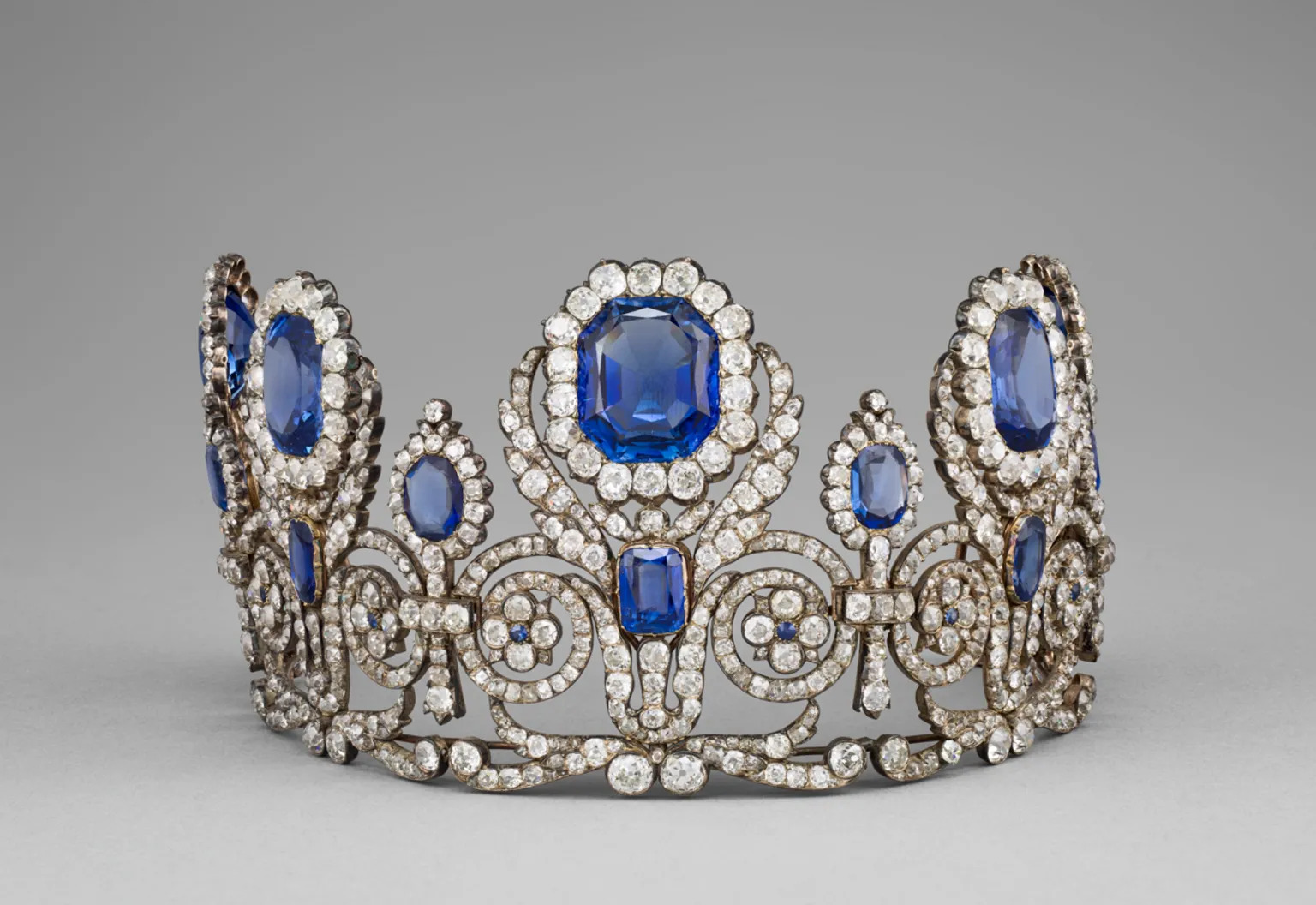
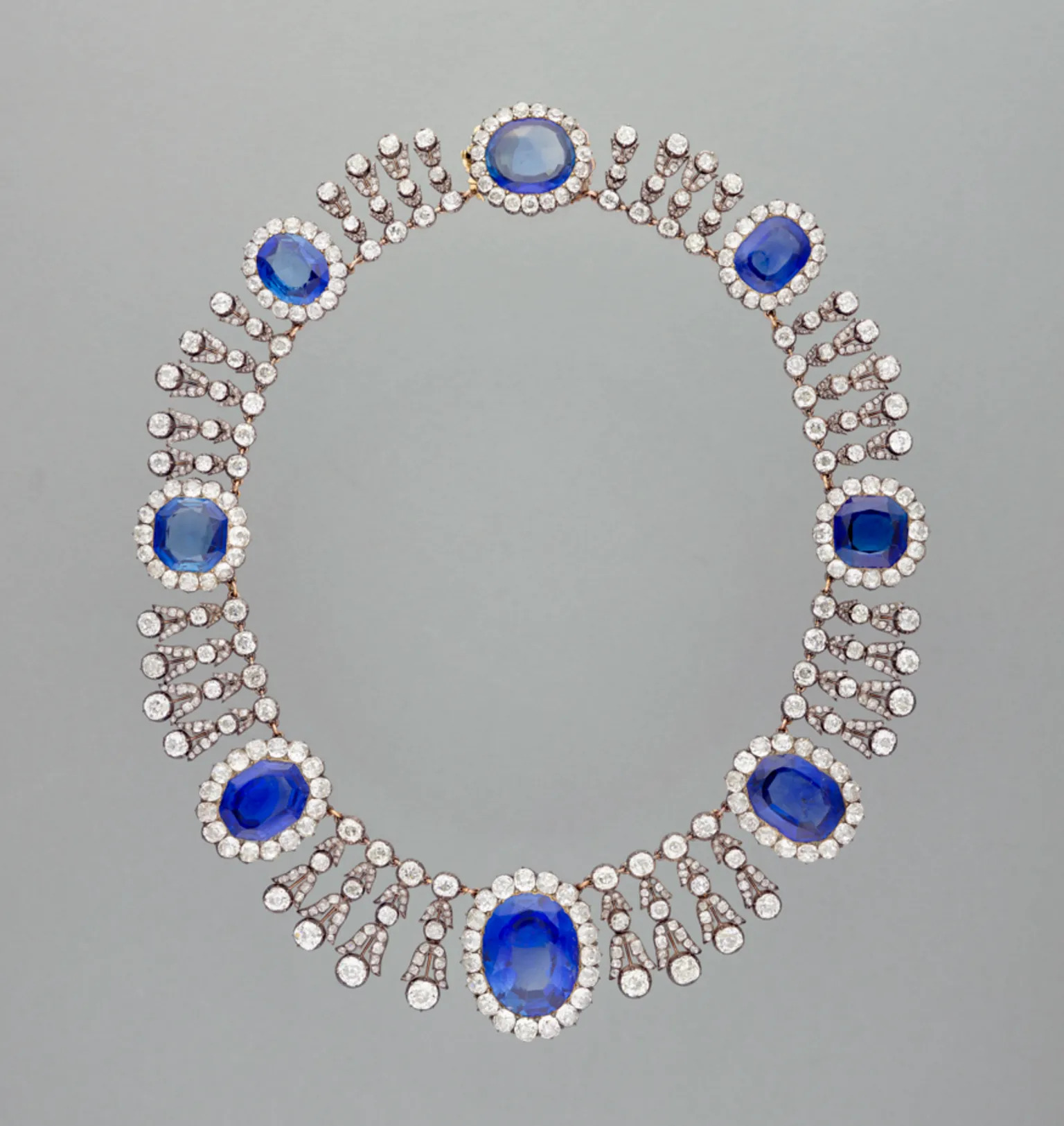
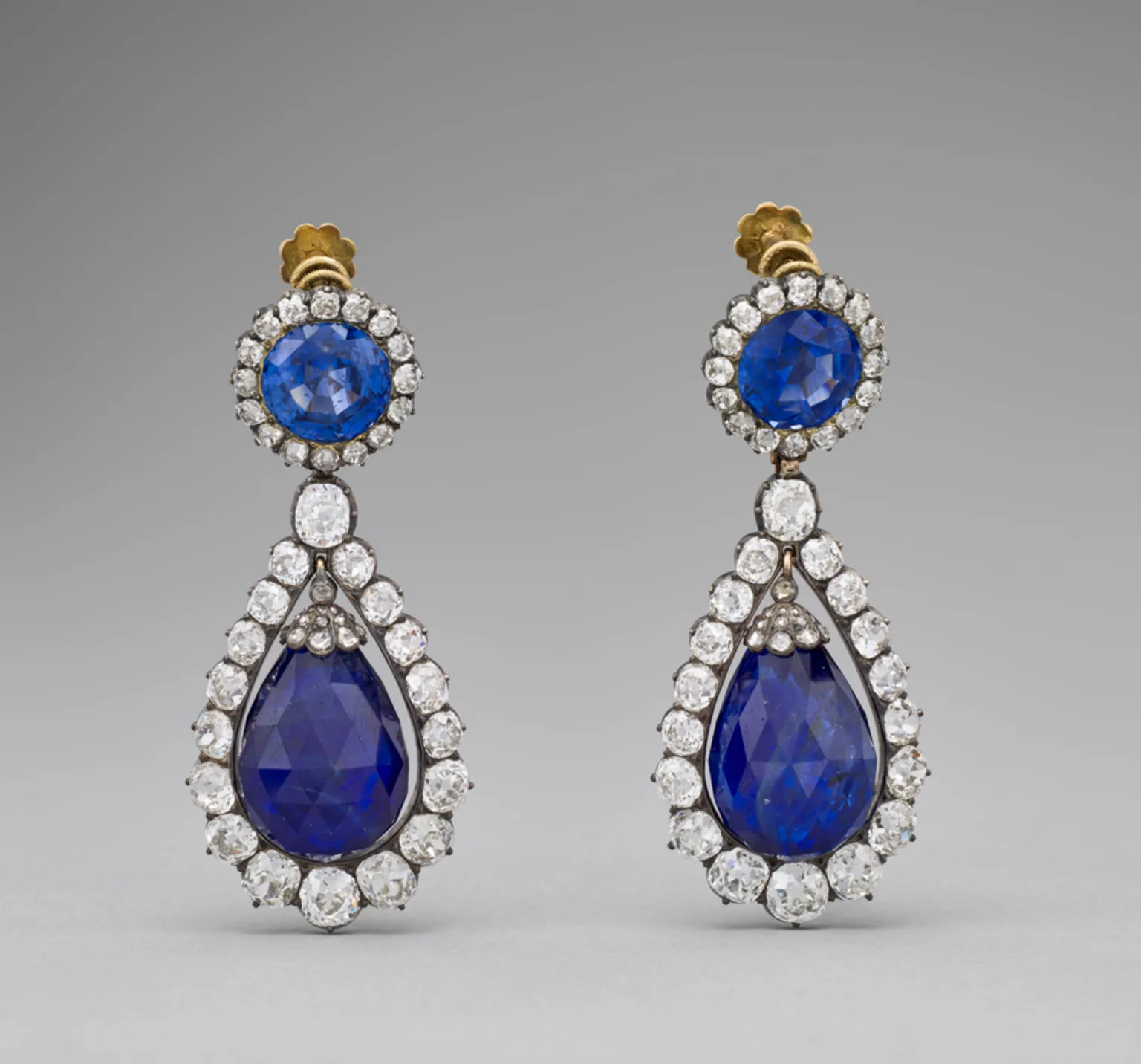
Photo: Courtesy of the Louvre
The Sapphire Set of Queen Marie-Amalie and Queen Hortense
The Sapphire Set of Queen Marie-Amalie and Queen Hortense was created during the First French Empire. It originally belonged to Queen Hortense of Holland and was later passed down to Marie-Amalie of Bourbon-Sicilies, Queen of the French.
These exquisite jewels changed hands among French royals and aristocrats before being acquired by the Louvre in 1985.
The complete set includes a tiara composed of twenty-four sapphires and 1,083 diamonds, a necklace containing eight sapphires and sixty-one diamonds, a large brooch featuring four sapphires and 263 diamonds, a pair of earrings with fifty-nine diamonds, and two small brooches containing one sapphire each and twenty-six diamonds.
Among the stolen items, the necklace, tiara, and one earring were taken but have since been recovered.
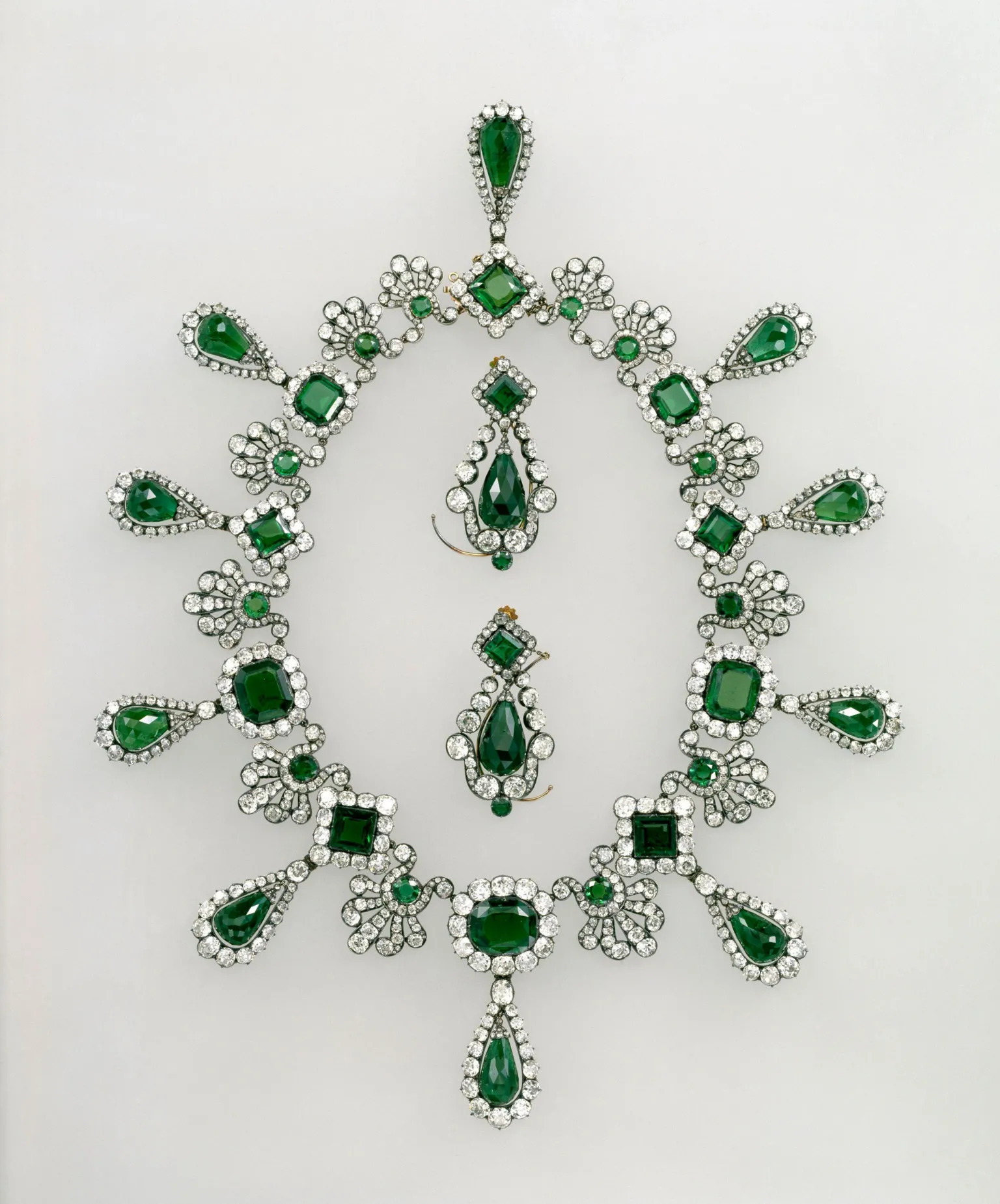
Photo: Courtesy of the Louvre
The Emerald Necklace and Earrings of Empress Marie Louise
Emperor Napoleon Bonaparte commissioned an emerald and diamond necklace, matching earrings, and a tiara for his second wife, Empress Marie Louise. Historians debate whether these were intended as a wedding gift or a gesture of gratitude for producing an heir.
The pieces remained within Marie Louise’s family for many years. She was spared Napoleon’s exile, and a treaty allowed her to retain her jewels as personal property. Eventually, the jewels came into the possession of Liliane de Rothschild. In 2004, the Friends of the Louvre repurchased the earrings and necklace from her descendants.
The tiara, however, was sold to Van Cleef & Arpels in the 1950s and later found its permanent home at the Smithsonian Institution.
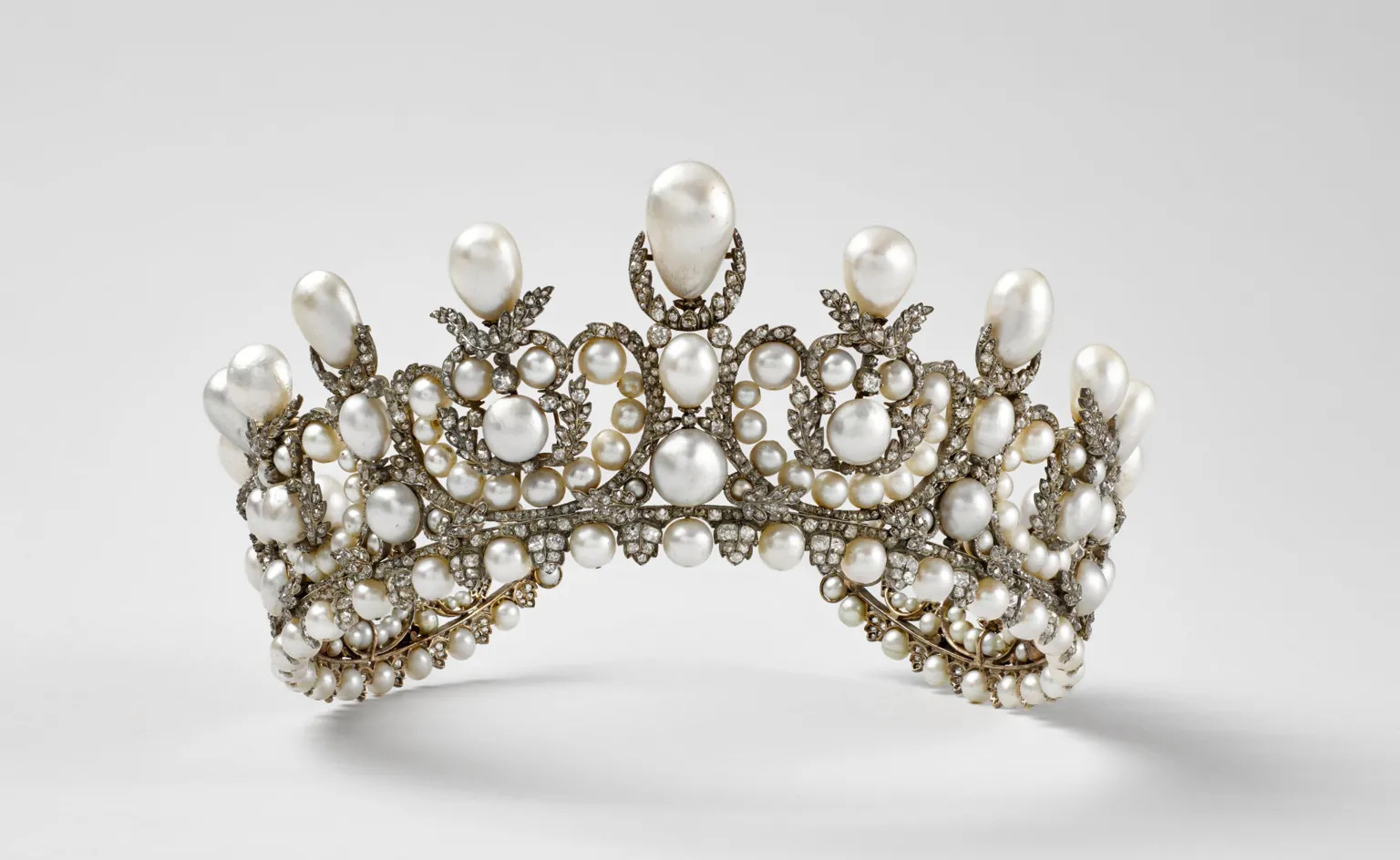
Photo: Courtesy of the Louvre
The Tiara and Brooches of Empress Eugénie
The tiara of Empress Eugénie features 212 pearls and 1,998 diamonds. Commissioned by Emperor Napoleon III to celebrate his 1853 marriage to Eugénie de Montijo, it was crafted using stones that once adorned the jewels of Empress Marie Louise and Princess Marie Thérèse, Duchesse d’Angoulême.
After Napoleon III and Eugénie were exiled, the tiara remained in France. When the Crown Jewels were auctioned in 1887, Prince Albert of Thurn und Taxis purchased it as a wedding gift for Archduchess Margarethe Klementine of Austria. The piece was later sold in a 1992 Sotheby’s auction, where it was acquired by the Friends of the Louvre.
The diamond bow brooch, composed of two tassels and five fringes, contains 2,438 diamonds and 196 roses. Believed to have once been part of a diamond belt owned by Eugénie, its origins remain partly mysterious.
Sold at the 1887 auction to jeweler Emile Schlessinger—acting on behalf of Caroline Astor in New York—the brooch later passed through the Beauchamp family before being sold to jeweler Ralph Esmerian in 1980. After appearing in exhibitions and auctions, it was finally acquired by the Louvre in 2008.
Another notable piece, the Reliquary Brooch, was made by Paul-Alfred Bapst in 1855. Designed like a chandelier, it contains a hidden compartment possibly used for devotional purposes. It features two Mazarin diamonds—once owned by Cardinal Jules Mazarin—and ninety-four diamonds in total.
In addition to the jewels mentioned above, the thieves also stole the crown of Empress Eugénie but dropped it while fleeing. The crown was found badly damaged after being pulled through a display case opening too small for its frame.
Louvre director Laurence des Cars stated that a delicate restoration is possible, remarking that: