
AU REVOIR ET MERCI À OLIVIER ROUSTEING DE BALMAIN
- BY KRISTOPHER FRASER
- 18 NOVEMBER 2025
- 6 Min
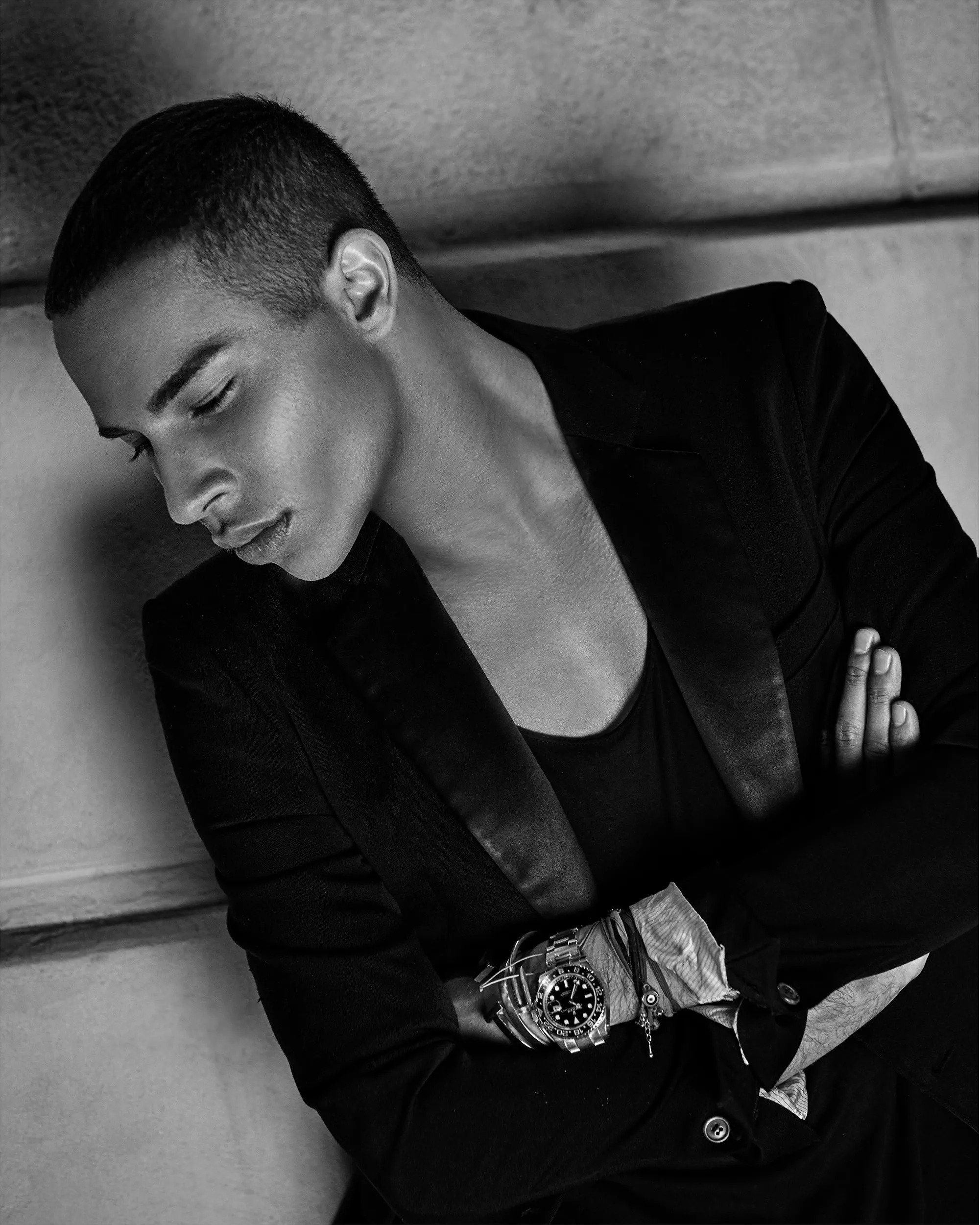
Photo: Courtesy of Balmain
On November 4, Balmain announced that its creative director, Olivier Rousteing, would step down from the brand after 15 years at its helm. Rousteing had one of the most notable tenures of any creative director and transformed Balmain into the luxury powerhouse it is today.
When Rousteing first arrived at Balmain, the brand had undergone a series of changes since its namesake founder, Pierre Balmain, passed away. After Balmain died in 1982, his right-hand man, Erik Mortensen, took over. In 1990, Mortensen left the brand, and Hervé Pierre enjoyed a brief stint as creative director from 1990 to 1992.
Oscar de la Renta, arguably the most prolific designer before Rousteing, led Balmain as creative director from 1993 to 2002 and steered the brand through the decline of couture and the rise of ready-to-wear. De la Renta left the brand in 2002.
In 2005, fashion designer Christophe Decarnin joined the brand and began laying the groundwork for Rousteing to turn Balmain into the modern powerhouse it is today. Decarnin determined that he would modernize the brand and bring it into the 21st century. Under his creative direction, he made pieces flashier and edgier, starkly contrasting the classic styles the brand had maintained for decades.
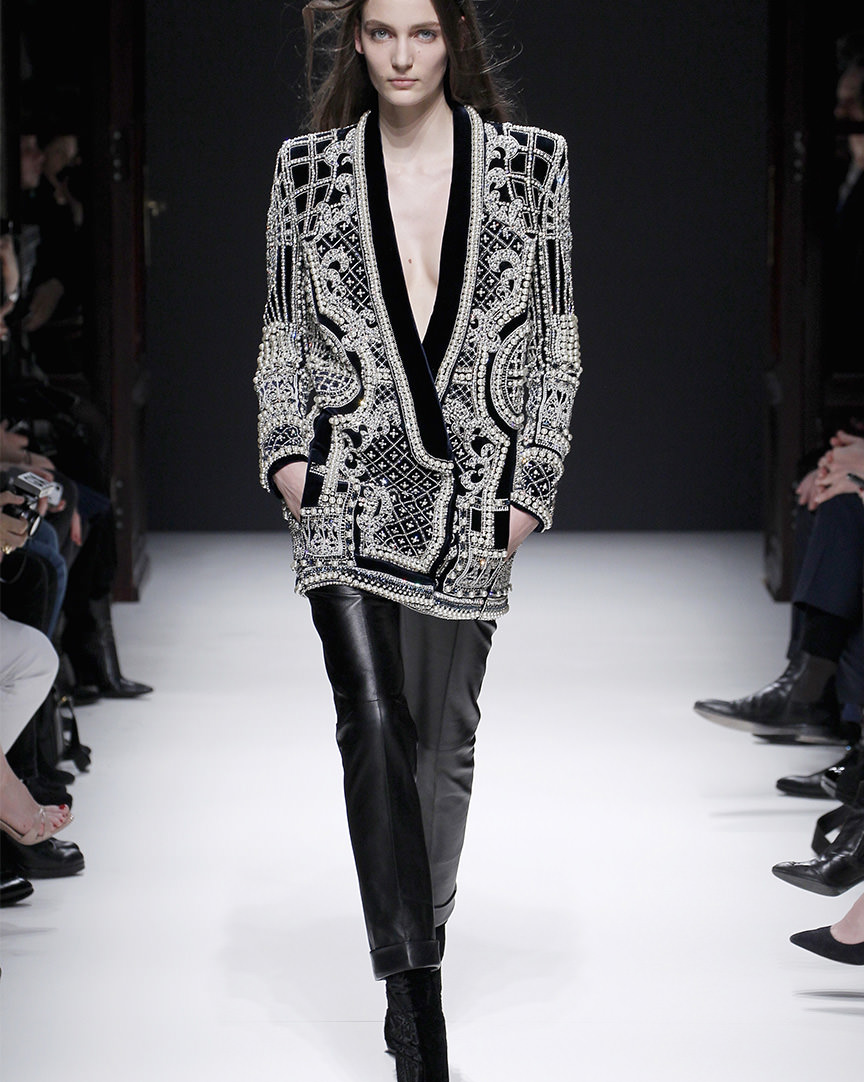
Photo: Courtesy of Balmain
In April 2011, Olivier Rousteing replaced Decarnin. Rousteing broke ground as one of the youngest creative directors of any major fashion house, the first Black creative director in such a high-profile position, and the first Black creative director at a European fashion house since Hylan Booker attempted to reignite the House of Worth in London and Jay Jaxon designed for the House of Jean Louis-Scherrer in the 1960s.
Rousteing attended École Supérieure des Arts et Techniques de la Mode but dropped out after his first year. From 2003 to 2008, he served as creative director of Roberto Cavalli’s womenswear collections, giving him a strong understanding of luxury brands, celebrity, and the inner workings of leading a major fashion label. He joined Balmain in 2009 and initially worked under Decarnin.
When Rousteing took over the brand as creative director, he shifted gears entirely. Rather than continue Decarnin’s legacy of flashy pieces, Rousteing prioritized bringing more of a couture sensibility to the brand.
Under Rousteing’s leadership, menswear accounted for 40 percent of Balmain’s business. Prior to the brand’s acquisition by Mayhoola, Balmain did not reveal sales figures, but estimates suggest that from 2012 to 2015, Rousteing increased Balmain’s revenue between 15 and 20 percent.
Among the keys to Rousteing’s success at Balmain were his acclaimed celebrity partnerships. Rousteing befriended and collaborated with reality star and entrepreneur Kim Kardashian, who appeared in Balmain’s ad campaigns and regularly attended the brand’s fashion shows. In addition to Kardashian, Rousteing also courted global superstars such as Rihanna, Beyoncé, and Justin Bieber.
Thanks to the celebrities he strategically positioned himself with, Rousteing helped Balmain become the first French brand to surpass one million followers on Instagram. During his tenure, he also opened more retail stores, including a New York flagship that launched in 2016.
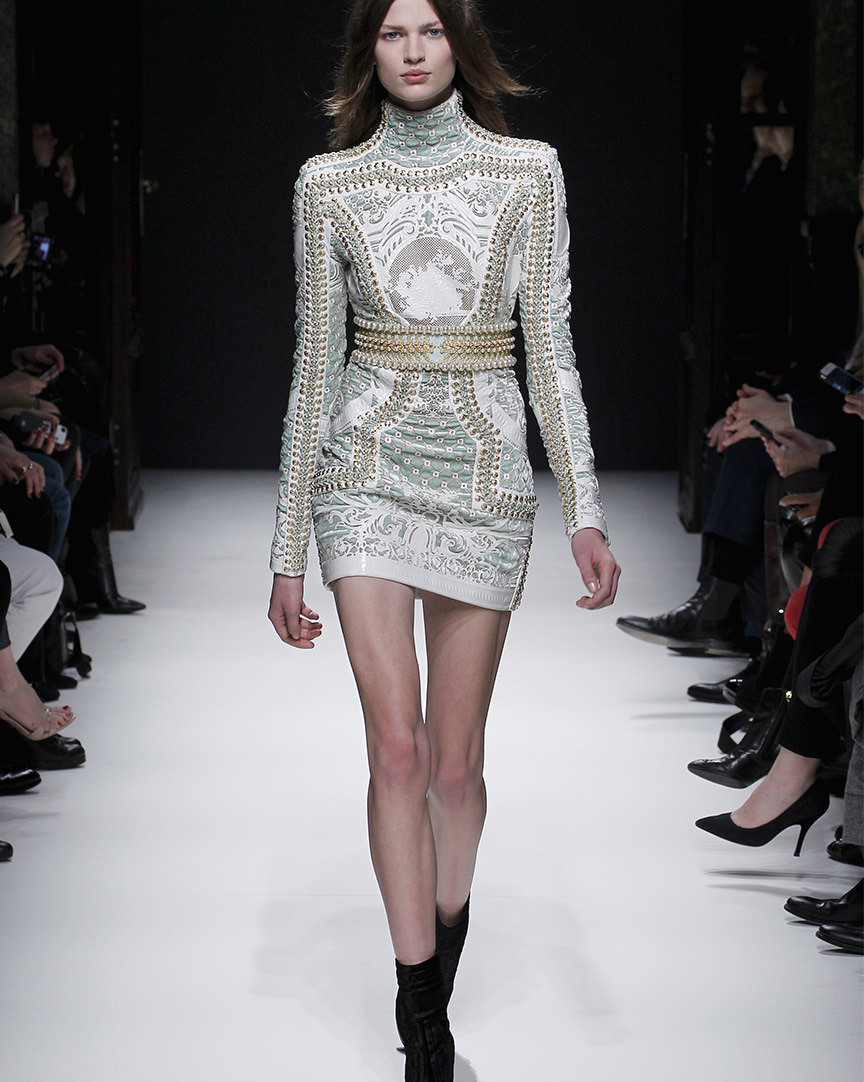
Photo: Courtesy of Balmain
In 2015, Rousteing elevated Balmain’s global profile and created Balmain for the masses when he joined H&M’s roster of high-fashion collaborators for Balmain x H&M. He announced the collaboration at the 2015 Billboard Music Awards, where he walked the red carpet with Kendall Jenner and Jourdan Dunn, who wore pieces from the collection. The collaboration proved so popular that crowds formed massive lines in New York, and shoppers physically scuffled as they tried to buy pieces.
After Mayhoola acquired the brand, Rousteing sought new ways to elevate Balmain. For fall 2017, he launched a full-range accessories line, including handbags and shoes. Because accessories often serve as the bread and butter of luxury brands, he recognized that this move was long overdue.
In 2019, he teamed up with model Cara Delevingne and Puma to produce a 35-piece Puma x Balmain athletic wear collection that became a major commercial success.
That same year, Rousteing revived Balmain’s haute couture collections for the first time since 2002. He crafted the collection with a futuristic vision, dramatic silhouettes, Swarovski crystal embellishments, and graffiti-inspired patterns. Notably, he designed the entire collection in white.
Rousteing steered Balmain through the global COVID-19 lockdown, the robbery of the brand’s clothes ahead of its September 2023 runway show, and a worldwide luxury downturn. Thanks to Rousteing, Balmain stands today as a larger cultural force, and his historic tenure at the house remains one for the history books. The industry now waits to see what the acclaimed designer will do next.